
Why use ‘port’ and ‘starboard’ instead of left and right?
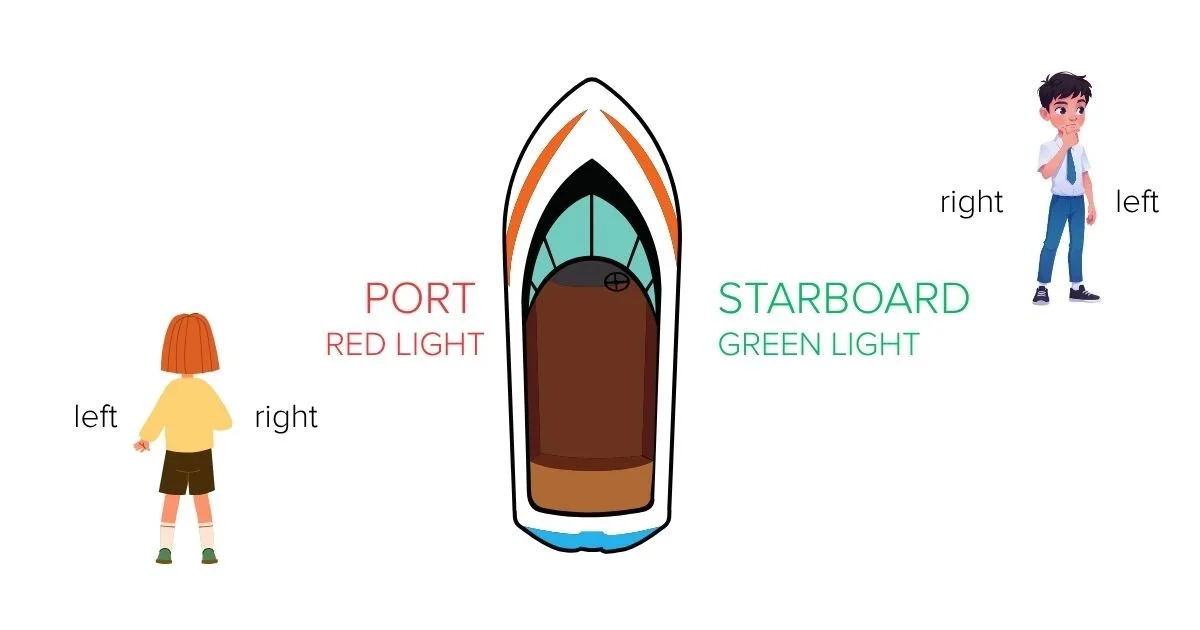
There is a very good reason for this. ‘Port’ and ‘starboard’ always refer to a fixed place ON THE BOAT, whereas left and right are relative to where a person is standing. if you are standing on a boat and turn around, left and right change positions, port and starboard do not.
The word ‘Starboard’ originated when boats had no rudders and were steered by means of an oar, placed over the stern and to one side, situated to be convenient to use for the majority of people who were right handed. This was known as the Steerboard, which became eventually ‘starboard’, and soon this side of a ship was designated the starboard side.
Because the steering oar was towards the right side, boats docked with their left side against the pier. This side was known as laddebord (derived from the Middle English lade, meaning "to load," and bord, meaning "side"), which became ‘larboard’. However, in noisy or challenging sea conditions having two words so similar as starboard and larboard tended to lead to chaos or confusion, so in 1844, the Royal Navy officially changed larboard to ‘port’, referring to the side next to the port, for loading.
The port side of a vessel is always marked by a red light, and the starboard side by a green light. The words ‘port’ and ‘starboard’ are crucial for preventing collisions at sea, as all vessels are regulated by the International Regulations for Preventing Collisions at Sea (COLREGS)
